

How to Sell Books on Amazon: A Step-by-Step Guide to Making Real Money

Introduction
A used book that cost $3 at a thrift store can sell for $47 on Amazon. The listing takes about 90 seconds.
Most people never try it, not because it doesn’t work, but because no one showed them how.
This guide changes that. You’ll learn how to sell books on Amazon profitably by finding books worth buying, evaluating them before you spend a dollar, pricing them correctly, and building a sourcing routine that actually holds up over time.
These are not recycled tips you’ve already seen. Just a straightforward walkthrough of how to sell books on Amazon, backed by nearly a decade as a top-25 Amazon bookseller with over $20M in lifetime book sales.
Here’s how it works.
In this blog:
- Why Sell Books on Amazon?
- Where to Find Books Worth Reselling on Amazon
- How to Know If a Book Is Worth Buying Before You Sell It on Amazon
- How to List Books on Amazon
- How to Price Your Books When Selling on Amazon Without Losing Money
- Shipping and Fulfillment
- How to Scale Your Amazon Book Reselling Business
- Common Mistakes Beginners Make
- FAQs
Why Sell Books on Amazon?
Amazon sells around 300 million printed books every year. That’s not a shrinking market, it’s one of the most active product categories on the entire platform. And a significant portion of those sales come from independent resellers, not publishers.
Here’s what makes books different from almost every other product you can resell on Amazon.
Books have barcodes. That means you can scan one in under a second and instantly know what it’s selling for, how fast it’s moving, and what your profit looks like after fees. No guessing, no research rabbit holes.
They’re also everywhere. Thrift stores, library sales, estate sales, and garage sales. Books are also one of the most donated and discarded items in the world. That keeps your sourcing costs low. Most used books can cost between $1 and $4 to acquire.
And the margins can be significant. A textbook picked up for $4 can list for $60. A niche non-fiction title bought for $2 can sell for $35. Although not every book hits those numbers, it’s enough to make the model work.
There’s also no brand gating for most titles. Unlike electronics or name-brand products, you don’t need special approval to list the majority of books on Amazon. You find it, you list it, you sell it.
For beginners learning how to sell books on Amazon, books remain one of the most accessible product categories to start with. The inventory is inexpensive, widely available, and easy to evaluate.
Step 1: Where to Find Books Worth Reselling on Amazon
Sourcing is where the business is won or lost. You can have the best listing process in the world, but if you’re buying the wrong books, it still won’t work.
The good news is that sellable inventory is closer than you think.
Thrift Stores
Most people learning how to sell books on Amazon start with thrift stores because the upfront cost is low and the inventory turns over constantly. Goodwill, Salvation Army, and local charity shops turn over inventory constantly. Books can usually be priced between $0.50 and $4, which gives you room to work with on margin.
The key is consistency. Visit the same stores regularly and you’ll start to learn their restock schedules. Most thrift stores restock specific sections on specific days. If you try talking to the staff, they may tell you.
One thing to prepare for is you’ll probably scan a lot of books before you find a winner. That’s normal. Even experienced resellers can expect to find one profitable book for every 20 to 50 they scan.
Don’t let that discourage you. One profitable scan can easily pay for an entire sourcing trip. Experienced resellers know the job is mostly filtering through bad inventory efficiently.
Factor in your gas and time honestly. Early on, it’s easy to break even on a trip and convince yourself it was profitable — the discipline to track actual net return per trip is what separates resellers who grow from those who stay stuck.
Library Sales
Library sales are some of the best sourcing events for book resellers. Libraries offload donated and retired inventory in bulk, often pricing books at $1 or less each. Library sales can happen throughout the year and are worth tracking in your area.
The competition can be real at these events. Expect other resellers to show up too. Get there early, scan fast, and focus on non-fiction, textbooks, and niche subjects rather than popular fiction.
One important note on textbooks specifically: Amazon has increasingly restricted certain publishers, requiring documentation that individual resellers typically can’t provide. Always scan a textbook in Seller Central before committing to a purchase — finding out you can’t list it after you’ve bought it is a frustrating and avoidable loss.
Estate Sales
Estate sales are underutilized by most resellers and that’s exactly why they’re worth your attention. Families liquidating a home often include entire personal libraries. Sometimes, these are rare, out-of-print, or high-value titles mixed in.
Pricing at estate sales is inconsistent, which may work in your favor. A book that someone priced at $2 because they didn’t know its value could be worth $80 on Amazon.
Garage Sales and Flea Markets
Lower volume, but the prices are hard to beat. Garage sales often price books between $0.25 and $1. If you’re in an area with active weekend sales, building a route can add meaningful inventory to your week.
Online Sources
Don’t overlook digital sourcing. Facebook Marketplace, Craigslist, and eBay lot listings regularly feature bulk book lots. Sometimes, there are hundreds of books for a flat price. The margin math is different when buying in bulk, but the upside is volume without the legwork.
Look for listings from people moving house, clearing out storage, or closing small used bookshops. Those are often the best deals.
A Note on Sourcing at Scale
If you want to move beyond part-time volume, bulk sourcing is where the real opportunity is. That means working with book drives, library systems, donation centers, and wholesale suppliers who can provide consistent, high-volume inventory.
That’s a longer conversation, but worth knowing early that the sourcing ceiling is much higher than a thrift store run once a week.
Finding books is actually the easy part — the skill that determines whether your sourcing trips make money is knowing which ones are worth putting in your bag, and that comes down to a handful of data points you can check in seconds.

Step 2: How to Know If a Book Is Worth Buying Before You Sell It on Amazon
Finding books is the easy part. Knowing which ones to actually buy, that’s the skill.
This is where most beginners lose money. They buy based on gut feel, or because a book looks valuable, or because they’ve heard of the author. None of that reliably translates to profit on Amazon.
What does reliably translate to profit? Data.
Start With Sales Rank (BSR)
Every product on Amazon has a Best Sellers Rank, or BSR. It tells you how well a book is selling relative to every other book in its category. The lower the number, the faster it sells.
Here’s a simple way to think about it:
- BSR under 100,000 — sells frequently, relatively fast-moving
- BSR 100,000 to 500,000 — sells regularly, expect weeks to a few months
- BSR 500,000 to 1,000,000 — slower moving, but can still be worth it at the right price
- BSR over 1,000,000 — moves slowly, ties up your capital for a long time
BSR alone doesn’t make the buying decision, but understanding BSR is one of the most important skills when learning how to sell books on Amazon. It helps you avoid tying up money in slow-moving inventory.
A lot of sellers learn this the hard way after buying books that looked profitable but barely moved for months.
Calculate Your Net Profit Before You Buy
This is non-negotiable. You need to know your profit before the book goes in your bag, not after you get home.
Here are the Amazon fees that eat into your margin:
- A referral fee of 15% of the sale price (Amazon’s rate for books)
- A per-item closing fee of $1.80
- Shipping cost if you’re fulfilling orders yourself (FBM)
- FBA fees if Amazon is fulfilling for you
A book listed at $12 doesn’t net you $12. After fees, you might walk away with $4 to $5. Here’s what that actually looks like on a $12 sale using FBM: Amazon’s 15% referral fee takes $1.80, the closing fee is another $1.80, and Media Mail shipping runs roughly $3.50. That leaves you with $4.90. If you paid $3 for the book, your profit is $1.90. If you paid $5, you lost money. Run this math before every purchase, not after.
A commonly used starting point among resellers is a minimum $10 payout and at least 3x your cost. Those aren’t fixed rules, your own floor will depend on your costs and volume, and these can be a starting framework.
Use a Scanning App
Doing this math manually for every book isn’t realistic. Most experienced sellers who know how to sell books on Amazon efficiently rely on scanning software to evaluate inventory quickly.
A good scanning app reads the barcode, pulls the live Amazon data, and shows you the BSR, current offers, and estimated profit, in seconds. That’s how you evaluate 200 books in an afternoon instead of 20.
After doing this math manually for my first few sourcing trips and realizing I was evaluating maybe 30 books an hour, I switched to a dedicated scanning app. Bookzy Mobile, built specifically for book resellers, pulls Average Sales Rank data alongside profit estimates so you’re making decisions based on selling trends — not just a single snapshot. At a thrift store with 400 books on the shelf, that speed difference is the whole business.
Check the Condition
Amazon has different condition grades for used books: Like New, Very Good, Good, Acceptable, and Collectible. The condition you can honestly assign to a book directly affects what you can list it for.
Before you buy, check for:
- Writing or highlighting inside
- Torn or missing pages
- Water damage or warping
- Missing dust jackets on hardcovers
- Remainder marks (a small line or dot on the page edges)
A book in poor condition isn’t automatically unsellable, but it can limit your pricing and increase your return risk. What surprises a lot of beginners is how much the condition affects buyer trust, especially for textbooks and academic books.
Watch Out for These
A few categories that tend to disappoint resellers:
- Popular fiction — high supply, low prices, heavy competition
- Outdated textbooks — editions matter enormously; last year’s edition can lose most of its value
- Penny books — if the lowest price on Amazon is $0.01, walk away. After fees, you lose money on every sale
The goal isn’t to find the most interesting book. It’s to find the book with the best return relative to what you’re paying for it.
Once you know a book is worth buying, how you list it determines whether it actually sells — and most beginners underestimate how much the listing itself affects conversion.
Step 3: How to List Books on Amazon
If you’re learning how to sell books on Amazon for the first time, listing inventory correctly matters more than most beginners realize.
Once you have inventory, the next step is getting it live on Amazon. The process is straightforward, but the decisions you make here affect your fees, your storage, and how fast your books actually sell.
Set Up Your Amazon Seller Account
Before you list anything, you need an Amazon seller account. There are two Amazon selling plan options:
- Individual plan — no monthly fee, but Amazon charges $0.99 per item sold. Works if you’re selling fewer than 40 books a month.
- Professional plan — $39.99 per month, no per-item fee. Makes sense once you’re moving at a consistent volume.
If you’re just testing the waters, start with the Individual plan. Once you’re selling regularly, switch to Professional. The math tips in your favor quickly.
FBM or FBA: Which One Is Right for You?
One of the biggest decisions you’ll make when figuring out how to sell books on Amazon is whether to use FBM or FBA fulfillment. It shapes your workflow, your costs, and your margins.
FBM — Fulfilled by Merchant means you store the books, pack them, and ship them yourself when an order comes in. You have full control over your inventory and you avoid Amazon’s storage fees. The trade-off is time since every order requires your attention.
FBA — Fulfilled by Amazon means you ship your inventory to Amazon’s warehouse and they handle storage, packing, and shipping. Your listings become Prime-eligible, which increases visibility and conversion. The trade-off is cost. FBA adds fulfillment and storage fees on top of the standard selling fees.
Here’s a simple way to think about it:
FBM works well when you’re starting out, selling lower volumes, or dealing with slow-moving inventory where long-term storage fees would hurt you.
FBA works well when you’re moving consistent volume, want Prime eligibility, and have inventory that sells within a reasonable timeframe.
Many resellers run both simultaneously, FBA for fast-moving titles, FBM for slower or lower-value books. That’s a smart way to manage costs as you scale.
Creating Your Listing
For most books, the product page already exists on Amazon. You’re not creating a new listing from scratch. You’re adding your offer to an existing one. Find the book by ISBN, select your condition, set your price, and you’re live.
The one section that’s entirely yours is the condition note. Don’t skip it.
A condition note is a short description of the book’s actual state. It sets the buyer’s expectations before they purchase, which directly reduces your return rate. Be specific and honest. Here’s an example:
A weak condition note: “Good condition.”
A strong condition note: “Pages clean and unmarked. Cover has minor shelf wear on the corners. Binding tight. No writing inside.”
The second version builds buyer confidence. It also protects you if a return request comes in.
Listing at Scale
Listing one book at a time through Amazon Seller Central is fine when you’re starting out. But as your inventory grows, it can become a bottleneck.
This is where listing software makes a real difference. Bookz Pro’s Lister lets you scan barcodes and list books to Amazon significantly faster than manual entry. It also includes condition templates that keep your notes consistent across every listing. If you’re processing dozens or hundreds of books at a time, that speed compounds quickly.
Getting your listing right protects your margin on paper. What erodes it in practice is pricing — and it’s more dynamic than most beginners expect.

Step 4: How to Price Your Books When Selling on Amazon Without Losing Money
Pricing is where a lot of resellers quietly bleed profit. Not because they’re careless, but because Amazon’s marketplace moves constantly and a price that made sense yesterday may not make sense today.
Getting this right matters more than most beginners expect.
Understand What You're Pricing Against
When you list a used book on Amazon, you’re entering an existing offer page with other sellers already on it. Buyers almost always go for the lowest price in their condition tier, so your price relative to the competition directly determines whether your book sells or sits.
Before you set a price, look at:
- How many other sellers are offering the same book in the same condition
- What the lowest current price is
- Whether any of those offers are FBA (Prime-eligible listings may tend to convert better even at a slightly higher price)
That context tells you where to position your listing.
Don't Race to the Bottom
Resellers who understand how to sell books on Amazon long term focus on protecting margins, not just making the fastest sale possible.
Here’s a pattern that catches almost every new reseller. You list a book at $14. Another seller drops to $13. You drop to $12. They go to $11. Within days, you’re both selling at a loss.
This is called a price war and it’s one of the fastest ways to destroy your margins. Most experienced sellers go through this phase early on. What feels like “staying competitive” quickly turns into giving away profit unnecessarily.
The instinct to be the cheapest is understandable, but it’s the wrong move. If the market price for a book in Good condition is $14 and you list at $9 to guarantee a sale, you’ve just voluntarily given away profit. Sometimes it’s better to hold your price and wait for competing copies to sell through.
Factor In All Your Fees Before You Price
This bears repeating because it’s where a lot of money quietly disappears.
For every book you sell on Amazon, you’re paying:
- A referral fee of 15% of the sale price (Amazon’s rate for books)
- A per-item closing fee of $1.80
- Shipping costs if you’re on FBM, or FBA fulfillment fees if Amazon is handling it
If you need $8 to make the purchase worthwhile, price accordingly. Don’t just copy the lowest offer and hope for the best.
Adjust for Condition and Edition
Two copies of the same title can have very different values depending on condition and edition.
A Like New copy of a textbook justifies a significantly higher price than an Acceptable copy with highlighting throughout. Price them the same and you’re either leaving money on the table or setting yourself up for a bad review.
Edition matters too, especially for textbooks and academic titles. The current edition can sell for $60 while the previous one sits at $4. Always confirm which edition you have before you price.
Keep Your Prices Current
Amazon’s marketplace shifts daily. A book you priced three weeks ago may now be sitting well above or below the current market rate. If you’re managing a large inventory, manually checking and updating every listing isn’t realistic.
This is where repricing software earns its place. Bookz Pro’s Repricer automatically adjusts your prices based on Average Sales Rank and competitor activity, keeping you competitive without requiring you to monitor every listing manually. It’s designed specifically for book resellers, which means it accounts for the nuances of the book category rather than applying a generic retail repricing logic.
If you’re managing more than a few dozen listings, manual repricing will cost you more in lost sales and wasted time than the tool itself.
Pricing correctly sets you up to profit. Whether that profit actually reaches you depends on how reliably and cost-effectively you fulfill the order.
Step 5: Shipping and Fulfillment
You’ve sourced your books, listed them, and priced them correctly. When that first order comes in, you need to fulfill it properly.
Shipping is one of the operational skills that separates casual sellers from people who truly understand how to sell books on Amazon profitably. A late shipment or a poorly packed book can hurt your seller metrics, and on Amazon, your metrics matter.
FBM Fulfillment: Shipping It Yourself
If you’re on FBM, fulfillment is entirely on you. Here’s what that looks like in practice.
Packaging
Books need to arrive in the condition you described. That means protecting them in transit.
For most books, a poly mailer or a padded envelope works well for paperbacks. Hardcovers and larger books are better shipped in a snug cardboard box or a wraparound mailer. Avoid loose packaging, a book that shifts around in transit can arrive damaged.
A few things worth having on hand:
- Poly mailers in multiple sizes
- Bubble wrap for fragile or high-value titles
- Cardboard box mailers for hardcovers
- A thermal label printer if you’re processing volume. Printing on regular paper and taping it works, but it slows you down
Shipping Method
You have several carriers to choose from. Each has its strengths depending on your volume, location, and the order’s requirements.
USPS is the most popular choice among book resellers. Media Mail keeps costs low for standard used books, while First Class and Priority Mail cover faster or heavier shipments.
UPS is worth considering for heavier packages or bulk shipments. Rates can be competitive if you’re shipping high volume, and they offer reliable tracking and delivery windows.
FedEx is another solid option for heavier or higher-value shipments. Like UPS, negotiated rates become available as your volume grows, so the cost picture improves over time.
As a beginner, USPS will likely cover most of your needs. As your volume grows, it’s worth comparing rates across carriers, even small differences per shipment add up quickly at scale.
Handling Time
Amazon gives you a handling time window. This is the number of days between receiving an order and shipping it. Keep this realistic and stick to it. Consistently shipping within your stated handling time protects your account health metrics.
If you’re running a part-time operation, a 2-day handling time is manageable. If you’re processing high volume, same-day or next-day handling improves your seller performance score.
FBA Fulfillment: Letting Amazon Handle It
With FBA, your job is to get inventory into Amazon’s warehouse correctly. Amazon handles storage, packing, shipping, and customer service after that.
What matters most is to make sure every book arrives in the condition you listed it. But before you send your first FBA shipment, it’s worth understanding exactly how Amazon calculates your fees and what it’ll cost you. Get these right and FBA largely runs itself.
Fulfillment is where the operation either holds together or starts leaking. Once it’s running smoothly, the question shifts from how to do this right to how to do it at scale.
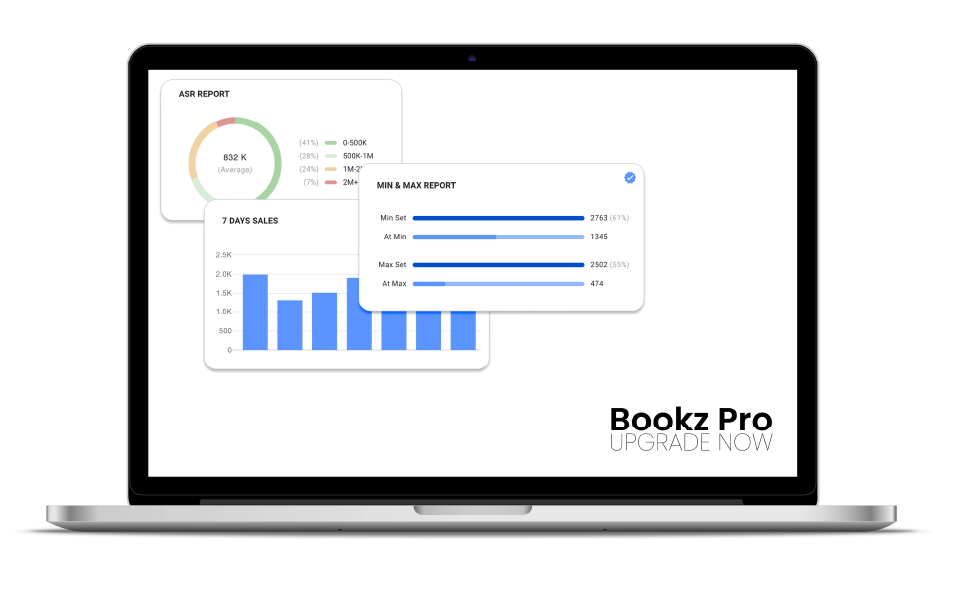
All in One Software
for Book Sellers
Scout Better – List Faster – Reprice Smarter
Over 30% Business Growth
Achieved by Our Clients
Step 6: How to Scale Your Amazon Book Reselling Business
Getting your first books listed and sold is one thing. Building an operation that generates consistent income over time is a different challenge entirely.
Scaling isn’t about working harder. It’s about building systems that let you process more inventory without everything depending on you.
Here’s what that looks like in practice.
Source in Higher Volume
Once you understand how to sell books on Amazon consistently, scaling becomes more about systems and sourcing than finding random profitable books.
Thrift Store runs work when you’re starting out. But if you want to move serious volume, you need more inventory coming in than a few store visits a week can provide.
That means expanding your sourcing channels:
- Build relationships with donation centers and book drives that can give you first access to inventory
- Attend library sales and estate sales consistently, not occasionally
- Look into wholesale and bulk book suppliers who can provide large lots at predictable costs
- Explore liquidation pallets from retailers and publishers
The resellers who scale successfully treat sourcing like a supply chain, not a treasure hunt.
Systematize Your Operation
At low volume, managing everything manually is fine. At high volume, every manual step becomes a bottleneck. Whether that’s listing books one at a time, checking competitor prices, or tracking what’s selling and what’s sitting.
The goal is to build a repeatable process where inventory moves efficiently from intake to listing to sold inventory. That means standardized workflows, consistent grading, and tools that remove unnecessary manual steps at every stage.
Know Your Numbers
Scaling without tracking is how resellers grow their revenue and shrink their margins at the same time.
At minimum, track:
- Your average profit per book after all fees
- Your sell-through rate: how quickly your inventory sells
- Your inventory age: how long books have been sitting unsold
- Your return rate and the reasons behind returns
These numbers tell you where the business is healthy and where it’s leaking. You can’t fix what you’re not measuring.
Recover What Amazon Owes You
If you’re running FBA at any meaningful volume, Amazon may have lost and damaged inventory more often than most sellers realize. Amazon is supposed to reimburse you for those losses, but they don’t always do it automatically.
Make sure you have a process for auditing your FBA inventory and filing reimbursement cases. It’s money you’ve already earned that would otherwise go uncollected.
The Right Tools Make the Difference
Scaling a book reselling business manually has a ceiling. At some point, the spreadsheets, the manual repricing, the listing one by one, are the things holding you back.
That’s exactly why Bookz Pro was built. It’s an all-in-one software platform built exclusively for Amazon book resellers, by people who have run book reselling businesses themselves. Sourcing, listing, repricing, inventory management, FBM fulfillment, and FBA reimbursements, all of it runs under one roof, built around how this business actually works.
Start your free 14-day trial to see how Bookz Pro fits into your workflow. If you’d like a walkthrough, book a demo and the team will answer your questions directly.
Amazon Book Reselling Blueprint
Read now, explore our full guide. Your revolution starts here. Subscribe to get the blueprint!
Want the full playbook in one place?
We put together the Amazon Book Reselling Blueprint. It’s a free resource that covers sourcing strategies, pricing frameworks, and scaling systems used by high-volume book resellers.
Common Mistakes Beginners Make
Most people learning how to sell books on Amazon make the same handful of mistakes early on. Here are the ones that cost new resellers the most, and how to avoid them.
Buying Without Checking the Data
This is the most common and most expensive mistake. A book looks valuable. The title sounds academic. The cover seems promising. So you buy it, without scanning it first.
Then you get home, check Amazon, and find twelve copies listed at $0.01.
Always scan before you buy. Always check the BSR, the current offers, and your estimated net profit before the book goes in your bag. Gut feel is not a sourcing strategy.
Ignoring Fees
Amazon’s fees are predictable, but they’re easy to underestimate when you’re new. Referral fees, closing fees, FBA fulfillment fees, storage fees, they stack up. A book listed at $10 doesn’t net you $10.
Before you buy anything, know exactly what you’ll walk away with after every fee is accounted for. If the numbers don’t work at the sourcing stage, they won’t work later.
Listing Penny Books
If the lowest price on Amazon for a book is $0.01, there’s a reason. Too many copies, too little demand. After fees, you don’t just break even on penny books, you lose money on every sale while spending time you could have used on profitable inventory.
Skipping Condition Notes
A listing without a condition note is a missed opportunity at best and a return waiting to happen at worst. Buyers want to know exactly what they’re getting. A specific, honest condition note sets the right expectations and builds the confidence that leads to a completed sale.
Ignoring Inventory Age
Books that don’t sell tie up capital and, if you’re on FBA, accumulate storage fees over time. A book that’s been sitting for six months may have made sense to buy originally, but holding it indefinitely isn’t a strategy. Almost every reseller eventually ends up with shelves full of books they were convinced would sell faster.
Review your inventory regularly. If a book has been sitting too long, consider lowering the price to move it or removing it from FBA to avoid ongoing fees.
Treating It Like a Hobby
This one is less obvious but just as costly. Book reselling works as a business. It struggles as a casual activity.
That means showing up consistently, tracking your numbers, optimizing your process, and making decisions based on data rather than feel. The resellers who build real income from this treat it with the same seriousness they’d bring to any other business, even when they’re starting small.
Final Thoughts
Learning how to sell books on Amazon isn’t a get-rich-quick scheme. But it is a legitimate, proven business model that works for part-time resellers building a side income and for high-volume operators running full-scale operations.
The fundamentals aren’t complicated. The difficult part isn’t learning how the business works. It’s staying disciplined enough to follow the process consistently, especially when sourcing trips or slow sales get frustrating.
Find books the data supports buying. List them accurately. Price them intelligently. Fulfill orders reliably. Then build systems that let you do all of that at greater volume without everything depending on your time and attention.
What separates resellers who build something sustainable from those who quit after a few months isn’t talent or luck. It’s consistency, the willingness to track what’s working, and the discipline to keep improving the process.
The people who successfully learn how to sell books on Amazon long term are usually the ones who treat it like a real business instead of chasing shortcuts.
If you’re just starting out, don’t wait until everything feels perfect. Start scanning, start listing, and let the real-world feedback sharpen your instincts faster than any guide can.
And if you’re ready to take the operation seriously — start by scanning the next ten books you come across at any thrift store or library sale this week. Check the BSR, run the fee math, and see what the data tells you. That single habit, done consistently, is what this entire business is built on. When you’re ready to stop doing it manually and start doing it at volume, Bookz Pro’s free 14-day trial is there. No commitment — just a faster version of the process you’ll already be running.
FAQs
How do beginners start selling books on Amazon?
Most beginners start by sourcing inexpensive used books locally, scanning them with a reseller app, and listing profitable titles through an Amazon seller account.
Is selling books on Amazon still profitable in 2026?
Yes, selling books on Amazon remains profitable in 2026, particularly for resellers who focus on niche non-fiction, textbooks, and out-of-print titles rather than common fiction. The key is disciplined buying — knowing your fee structure, setting a minimum profit floor, and scanning before you buy. Resellers who treat it as a data-driven business rather than a casual side activity consistently outperform those who don’t. The market is large enough that even part-time sellers running efficient systems can generate meaningful income.
What books sell best on Amazon?
Textbooks, academic books, niche non-fiction, technical guides, and out-of-print books tend to perform better on Amazon than common fiction titles. The strongest opportunities are usually books with consistent demand but limited supply. Many experienced resellers avoid heavily saturated fiction categories because the competition drives prices down quickly. In general, books that solve a problem, support education, or serve a specific niche audience tend to hold their value better over time.
How do you know if a book is worth selling on Amazon?
Before buying any book to resell, experienced sellers evaluate several key factors: sales rank (BSR), current competition, market price, edition, condition, and estimated net profit after Amazon fees. A profitable-looking price alone doesn’t guarantee a good buy if the book sells slowly or has too many competing sellers. Most successful resellers rely on scanning apps to quickly analyze real-time Amazon data before making a purchase decision. The goal is to avoid tying up money in inventory that may take months to sell.
What is a good sales rank for books on Amazon?
Many book resellers prefer books with a Best Sellers Rank under 500,000 because they tend to sell more consistently and move faster. Books under 100,000 often sell very quickly, while books between 100,000 and 500,000 can still perform well depending on price and competition. Higher-ranked books are not automatically bad buys, but they usually require more patience and stronger margins to justify the investment. Experienced sellers learn to balance sales rank with profitability rather than relying on a single number alone.
What scanning app is best for selling books on Amazon?
Many experienced book resellers use scanning apps like Bookzy Mobile to quickly check pricing, sales rank, competition, and estimated profit from a barcode scan.
Where do people find books to sell on Amazon?
Common sourcing locations include thrift stores, library sales, estate sales, garage sales, flea markets, donation centers, and bulk book suppliers.
Are thrift stores good for finding books to sell on Amazon?
Yes, thrift stores are one of the most common sourcing locations because books are inexpensive and inventory changes constantly.
What is the difference between FBA and FBM when selling books on Amazon?
FBM means you store and ship the books yourself, while FBA means Amazon handles storage, packing, shipping, and customer service.
How much does Amazon charge to sell books?
Amazon charges referral fees, closing fees, and fulfillment-related costs depending on whether you use FBA or FBM.
What condition should used books be listed under on Amazon?
Books should be graded honestly using Amazon’s condition categories such as Like New, Very Good, Good, or Acceptable.
Can books with highlighting or writing still be sold on Amazon?
Yes, books with highlighting or notes can still sell well if the condition issues are clearly disclosed in the listing.
How important are condition notes when selling books on Amazon?
Condition notes help buyers understand exactly what they’re purchasing and can reduce returns and negative feedback.
How long does it take to sell books on Amazon?
Some books sell within days, while others may take weeks or months depending on demand, pricing, and competition.
What are the biggest mistakes beginners make when selling books on Amazon?
One of the biggest mistakes beginners make is buying books without checking the data first. Many new sellers rely on instinct instead of analyzing sales rank, competition, fees, and estimated profit before purchasing inventory. Other common mistakes include overpaying for books, ignoring Amazon fees, listing low-demand inventory, pricing too aggressively during price wars, and holding onto unsold inventory for too long. Most experienced resellers eventually realize that long-term success comes less from finding random “goldmine” books and more from consistently making disciplined, data-driven buying decisions.
Can selling books on Amazon become a full-time business?
Yes, many resellers start part time and eventually grow into full-time operations by increasing inventory and improving their systems.
How do full-time Amazon book sellers scale their business?
Most scale by sourcing inventory in bulk, automating workflows, using repricing tools, and building efficient listing and fulfillment systems.
What is the best strategy for long-term success selling books on Amazon?
Long-term success usually comes from consistent sourcing, disciplined buying decisions, accurate listings, strong inventory management, using the right tools, and treating the business seriously.